
Providing safe and clean water for drinking and cooking without access to a well can be a daunting task, especially in rural and off-grid settings. However, with a bit of knowledge and ingenuity, it’s entirely possible to source, collect, and purify water from a variety of non-well sources. Whether it’s harnessing the bounty of rainfall, tapping into the hidden reserves of groundwater, or utilizing advanced filtration and distillation techniques, there’s a world of options out there for the resourceful homesteader or off-grid adventurer.
Key takeaways from this exploration include:
- Harvesting rainwater can provide a clean, sustainable source of water, although it requires a good collection and storage system.
- Groundwater can serve as a natural reservoir, accessible through springs or drilling, although its quality can vary.
- Distillation and filtration are essential processes for ensuring the cleanliness and safety of your water, regardless of its source.
- Revolutionary methods like reimagining your lawn as a rainwater harvesting system or using solar-powered water purification can provide innovative solutions for off-grid water sourcing.
- Water from lakes, rivers or springs can be viable options, but require careful consideration of potential contaminants and local regulations.
Sources of Water for Drinking and Cooking Without a Well
 Harvesting the Sky: Rainwater Collection
One of the simplest and oldest methods of sourcing water without a well is through the collection of rainwater. Free from many common pollutants and contaminants, rainwater, when properly collected and stored, can provide a clean, sustainable source of water for drinking and cooking. But remember, the cleanliness of your rainwater is only as good as your collection and storage system. Regular maintenance is crucial. Check for debris, clean your gutters, and ensure your storage tanks are sealed against pests and sunlight.
For those living in regions with abundant rainfall, this can be a primary source of water. However, even in drier climates, rainwater collection can supplement your water supply, reduce your dependence on well water, and conserve resources. There’s an undeniable satisfaction in harvesting the sky, in stepping a little closer to self-sufficiency.
Imagine this: sipping a cool glass of water, knowing it’s harvested from the last rainfall. You’re drinking the sky! (source)
From Beneath the Surface: Groundwater and Wells
Groundwater, a source often overlooked, serves as a natural reservoir beneath the Earth’s surface. While accessing groundwater typically requires drilling a well, some areas have natural springs where groundwater flows to the surface. If you’re lucky enough to have one on your property, it can be a reliable source of fresh water.
However, drilling a well is not a guarantee of striking water, and the quality can vary greatly depending on the geological makeup of your area. It’s a bit like a treasure hunt, with water as the gold. But don’t be discouraged. Many property owners have successfully tapped into this hidden resource for a steady water supply. (source)
Going the Extra Mile: Distillation and Filtration
Regardless of the source, ensuring your water is clean and safe for consumption is paramount. One method of purification is distillation, a process that involves boiling water and collecting the steam, which leaves contaminants behind. It’s a bit like giving your water a fresh start.
Keep in mind, distillation removes everything, including beneficial minerals. You may need to remineralize your water to ensure you’re getting the necessary nutrients. Alternatively, a good filtration system can remove contaminants while keeping those beneficial minerals intact. (source)
Whichever method you choose, remember: it’s not just about finding water; it’s about ensuring that water nourishes and sustains you. After all, water is life. So here’s to your health, to self-sufficiency, and to living life closer to nature.
Rainwater Harvesting: A Sustainable Solution for Water Without a Well
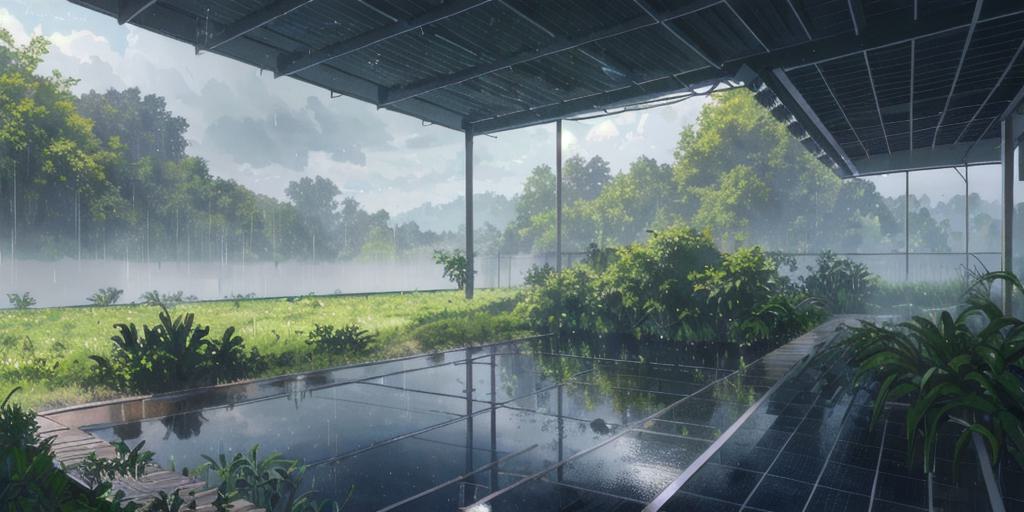 Reimagining Your Lawn: A New Revolution in Rainwater Harvesting
Imagine stepping outside your front door and seeing not just a lawn, but a living, breathing water collection and filtration system. That’s the reality for Jonathan McGee, an innovative architectural technologist from Leeds who has turned his small patch of green into a sustainable rainwater harvesting system. (source)
What’s unique about McGee’s system is that it is not just about capturing rainwater from the roof; it captures rainwater from the lawn itself. The blades of “grass” – actually AstroTurf – act as filters, trapping dirt and debris. Beneath this AstroTurf lies a harvesting tank just 10cm below the surface. It’s a shift in perspective, a reimagining of what your lawn can be – not just a patch of green, but a sustainable, self-cleaning water source.
Now, you may be thinking, “That sounds expensive.” And yes, the initial investment was not insignificant. But McGee insists that the system has already proved cost-effective. In the heat of the summer, when his garden demanded frequent watering, his rainwater harvesting system provided all the water he needed. It’s a case of looking beyond the immediate, seeing the long-term benefits, and taking the plunge.
Catch the Rain: Expanding the Practice
While rainwater harvesting systems have been gaining legal recognition and popularity, they remain largely within the realm of off-the-grid subcultures. Big corporations like Apple and Toyota have started integrating rainwater harvesting systems into their corporate campuses, but the practice needs to extend beyond these behemoths to reach residential developers and homeowners. (source)
The challenge, as always, is the upfront cost. That’s where we can learn from the success story of solar power. Just as with the installation of solar panels, setting up a rainwater harvesting system is a one-time investment that can reduce overall utility bills while providing ecological benefits. Governments and businesses can work together to offer tax credits, provide financing, and even mandate the inclusion of these systems in building codes.
It’s not about being a radical or an eco-warrior. It’s about making smart choices, using what nature provides us, and creating sustainable, self-sufficient systems that work in harmony with the environment.
Make It Your Own: A Call to Action
So, are you ready to take the leap and start harvesting your own rainwater? Remember, it’s not just about saving money or even about being “green”. It’s about embracing a lifestyle that is both rewarding and responsible. It’s about stepping away from dependence on systems that are damaging our planet and moving towards sustainable, self-sufficient living. And it starts with something as simple as catching the rain. (source)
Whether you live in a rural area with acres of land or a city apartment with just a small balcony, there are rainwater harvesting solutions that can work for you. From buckets placed under downspouts to complex system of tanks and filters, rainwater harvesting is an accessible, adaptable practice. Will you join the revolution?
Using a Water Filter to Purify Non-Well Water for Drinking and Cooking
 Grasping the Gravity of the Water Crisis
It’s time we face the chilling reality: clean, safe drinking water is a luxury that many don’t have access to. Picture this: you’re in Indonesia, a country that boasts an impressive share of Asia-Pacific’s freshwater, yet nearly half of its population lacks access to safe water. (source) You might be thinking, “But I’m not in Indonesia.” True, but this is a global issue. The water crisis isn’t confined to one region, it’s a universal problem, and its solution is our shared responsibility.
Understanding the Need for Non-Well Water Purification
Step away from the comfort of your faucet and consider those who rely on potentially contaminated sources for their water. This isn’t a hypothetical scenario, it’s a harsh reality. For instance, in many parts of Indonesia, there’s a presence of nitrite, chromium, manganese, cadmium, and a high level of Total Dissolved Solids (TDS) in the drinking water. This is causing various waterborne diseases, making the need for water purification a survival necessity, not just a health preference. (source)
So, how do you navigate this landscape? With a water filter. It’s not just a gadget, it’s a lifeline. This simple, yet powerful tool can transform contaminated water into safe, drinkable water, offering a glimmer of hope in a landscape where clean water sources are scarce.
Unleashing the Power of Solar-Powered Water Purification
Imagine harnessing the power of the sun, not just to light your home or charge your devices, but to ensure the purity of your drinking water. MIT researchers have done just that, designing a solar-powered water purification system that provides clean water at a fraction of the cost of traditional methods. (source)
This game-changing reverse osmosis system consists of two photovoltaic solar panels that power a set of pumps. These pumps push contaminated water through semiporous membranes that filter and purify the water. The result? About 1,000 liters of clean water a day for communities in need. It’s a shining example of how we can leverage technology and nature together to create sustainable, self-sufficient systems that improve health and quality of life.
But it doesn’t stop there. This system not only provides clean water, it empowers communities. The residents themselves learn how to operate and maintain the technology, fostering a sense of ownership and self-reliance. It’s not just about helping people survive, it’s about helping them thrive.
Whether you’re living off-grid or just striving for a more sustainable lifestyle, purifying non-well water is not just an option, it’s a necessity. With the right tools and technology, we can turn this necessity into an opportunity – an opportunity to promote health, foster self-reliance, and create sustainable solutions for our water crisis. Because at the end of the day, clean water isn’t a luxury, it’s a right.
Wellless Water Collection Systems: A New Solution for Rural Areas
 The Magic of Rainwater Harvesting
Imagine if every time it rained, you were able to capture and store that precious resource, using it to quench the thirst of both your family and your crops. This isn’t the stuff of fairy tales, it’s the science of rainwater harvesting, a system as ancient as civilization itself and as innovative as the future we’re stepping into.
So, how does it work? Picture this: Rain falls on your roof, flows down the gutters, and is directed into a storage tank. The stored water can then be used for irrigation, livestock, or even drinking, if it’s properly treated. Simple, right? But the beauty of this system lies not just in its simplicity, but in its efficiency. Every inch of rain falling on a 1,000 square foot roof can yield approximately 600 gallons of water. That’s enough to fill 16 bathtubs to the brim. (source).
Converting Air into Water: A Technological Oasis
Now, let’s leap from the grasp of gravity to the realm of advanced technology. What if we could extract water straight from the air? No, this isn’t a Star Trek episode. It’s atmospheric water generation, a breakthrough technology that quite literally pulls water from thin air.
These systems work by cooling the air and condensing the water vapor. Picture a cold glass on a hot day, the beads of water forming on its surface – that’s condensation. Now imagine capturing that water and converting it into a steady, reliable source of drinking water. This isn’t just a pipe dream. Companies like Skywater are already making this a reality, with machines capable of producing up to 300 gallons of fresh water a day (source).
Waste Not, Want Not: Greywater Systems
Finally, let’s turn our attention to an often-overlooked resource: waste water. Now, I’m not suggesting you start drinking from your toilet, but what if you could reuse the water from your shower, sink, and washing machine? That’s the concept behind greywater systems.
These systems collect and treat waste water from your home, making it safe for irrigation purposes. Not only does this reduce your overall water usage, but it also recycles nutrients back into the soil, nourishing your garden in the process. It’s a win-win, and another example of how innovation and sustainability can go hand-in-hand, turning waste into wealth and scarcity into abundance.
Whether you’re living off the grid or simply aiming to reduce your environmental footprint, these non-well water solutions offer a promising path forward. Each system embodies a potent blend of resourcefulness, resilience, and respect for the natural world. In the pursuit of water security, they remind us that sometimes, the most potent solutions are the ones that work with nature, not against it.
The Pros and Cons of Using a Water Spring for Drinking Water Without a Well
Discovering the Hidden Treasure: Water Springs
Imagine yourself as an explorer, venturing into the untouched wilderness. You’re off the beaten path, closer to nature, and you stumble upon a hidden treasure: a natural spring, bubbling up from the depths of the earth. This isn’t just a picturesque scene; it’s a vital source of water for those living off the grid. But is it a reliable and safe source for drinking water? Let’s dive in.
The Gleaming Pros of Spring Water
Spring water is nature’s gift, a natural reservoir teeming with beneficial minerals such as calcium, magnesium, potassium and trace elements. It flows from the earth, untouched by human intervention, and in many ways, it’s a dream come true for anyone seeking an independent source of water. Not only does it save you the cost of installing and maintaining a well, but it also saves you from possible contamination from bacteria, chemicals, and other pollutants that can make well water unsafe for consumption without proper treatment. (source)
Moreover, spring water is continuously replenished. It’s a sustainable resource, aligning with the ethos of living off the grid. You’re embracing a lifestyle that respects the natural rhythms of the earth, and what better way to do that than by drinking water that’s sourced straight from Mother Nature herself?
The Hidden Cons of Spring Water
However, as with everything in life, there are two sides to this coin. While spring water may be a natural and independent source, it’s not without its potential pitfalls. The purity of spring water is largely dependent on its source and the environment around it. Contamination can occur from runoff or chemical spills nearby, which may infiltrate the spring, making it unsafe for human consumption without appropriate treatment systems being in place.
Moreover, the flow of spring water is at the mercy of nature. Droughts and other environmental factors can impact the yield, making it a potentially unreliable source, especially during times of scarcity. Furthermore, accessing the spring, especially if it’s in a remote location, can pose logistical challenges.
Despite these potential drawbacks, with regular testing and careful management, spring water can be a viable option for those living off the grid. It embodies the spirit of independence and resilience, and it’s a testament to the bounty of nature. And isn’t that what escaping the 9-5 grind and moving closer to nature is all about?
How to Treat and Purify Non-Well Water for Safe Drinking and Cooking
Mastering Water Treatment: The Key to Off-Grid Hydration
Living closer to nature doesn’t mean you have to compromise on the quality of your basic necessities. As we’ve discussed earlier, spring water can be a viable source of water, but it isn’t without its potential pitfalls. However, with some knowledge and a hands-on approach, you can ensure that your water is safe for consumption. After all, it’s not just about survival, it’s about thriving in your new off-grid lifestyle.
So, how do we treat and purify non-well water for safe drinking and cooking? The answer lies in understanding and harnessing the power of several key techniques: boiling, chemical treatment, and filtration. Each of these methods comes with its own set of advantages and challenges, but together they form a comprehensive strategy for water purification that can be adapted to fit any off-grid lifestyle.
Boiling: Nature’s Oldest Purification Technique
Boiling is one of the most effective ways to purify water. It’s been used for centuries and it’s still one of the best methods to kill bacteria, viruses, and other microorganisms. According to the ‘Emergency Home Water Supply’, water that is boiled vigorously for five full minutes will usually be safe from harmful bacterial contamination. However, boiling doesn’t remove chemical contaminants or particulates, so it’s often best used in conjunction with other methods.
Remember, your source of heat is critical here. If you’re living off the grid, you may need to use a solar cooker or a wood-burning stove. Learning how to cook and boil water efficiently with these off-grid tools can be a rewarding challenge that brings you even closer to nature.
Chemical Treatment: The Double-Edged Sword
Chemical treatment, typically using iodine or chlorine bleach, is another common method of water purification. It’s effective against many types of microorganisms and is also useful for treating large volumes of water. However, it’s important to remember that these chemicals can also pose risks if not used correctly. The ‘Emergency Home Water Supply’ recommends using an eye dropper to add the chlorine or the iodine to the water to ensure accuracy.
Additionally, chemical treatment doesn’t remove particulates or chemical pollutants, and it can give the water an unpleasant taste. Despite these drawbacks, it’s a valuable tool in your off-grid water treatment arsenal.
Filtration: The Modern Solution
Water filtration can remove particulates, and with the right filter, it can also remove bacteria and other microorganisms. A high-quality filter system should be lightweight, have a fine pre-filter, a replaceable or clearable filter, a tight, well-made pump, high volume output, and quick filtration, as suggested by American Partisan.
Furthermore, the advent of portable, non-electric gravity-based water purifiers, as noted in an article on Tefwins, has made it possible to have clean, safe drinking water without relying on electricity. This technology uses gravity to remove impurities from the water, providing a chemical-free solution to water treatment.
Ultimately, the goal is to find a system that fits your lifestyle and provides you with safe, clean water. Whether it’s a simple gravity-based filter or a more advanced system, the right water treatment solution can make your off-grid lifestyle not only feasible, but enjoyable as well.
The Benefits of Harvesting and Storing Rainwater for Non-Well Water Sources
Embracing Rainwater: An Abundant and Sustainable Resource
There’s a certain elegance in the simple act of catching rainwater. It’s an abundant, naturally occurring resource that falls from the sky, and with a little ingenuity, it can be harnessed to fulfill many of our daily water needs. As pointed out in an article on Olympian Cares, rainwater is inherently free of many contaminants, making it a valuable addition to your off-grid water strategy.
Imagine, if you will, the soft patter of raindrops on your rooftop, each one a potential source of life-giving water. With the proper setup, every rainfall becomes a valuable asset, filling your storage tanks with clean, usable water. It’s a shift in perspective that brings you closer to the rhythms of nature, aligning your lifestyle with the cycle of the seasons.
Reducing the Need for Chemical Treatments
The beauty of rainwater is its inherent purity. It’s water in its most primal form, untouched by many of the pollutants found in municipal supplies or groundwater. Harvesting rainwater can significantly reduce the need for chemical treatments, making it ideal for various non-potable uses. As we’ve discussed before, chemical treatments can be a double-edged sword, effective but potentially risky if not used correctly. The ability to bypass them for certain applications is a clear advantage, both in terms of safety and environmental impact.
Rainwater collected from your roof can be used for irrigation, household cleaning, toilet flushing, and even bathing, all without the need for chemical treatments. This not only reduces the environmental impact of these treatments, but also helps to conserve valuable treated water for when it’s really needed – drinking and cooking.
Rainwater Harvesting: A Roofing Revolution
When we talk about rainwater harvesting, the role of your roof can’t be underestimated. As highlighted in an article on New Style Real, a well-designed roofing system can direct rainwater towards gutters, downspouts, and collection tanks, ensuring efficient capture and storage of rainwater for later use. Your roof becomes more than just a shelter, it becomes a key player in your water supply strategy.
However, it’s important to ensure that your roofing materials and coatings are non-toxic and do not leach harmful substances into the harvested rainwater. This might mean rethinking traditional roofing materials and exploring more sustainable options. It’s another challenge on the path to living closer to nature, but it’s one that brings with it the reward of sustainable, self-reliant living.
Embracing rainwater as a viable source of water is more than just a practical decision. It’s a step towards living in harmony with nature, aligning your needs with the natural rhythms of the environment. It’s about embracing the abundance that’s already there, waiting to be tapped, and using it to foster a healthier, more sustainable lifestyle.
The Role of Grey Water Systems in Providing Water Without a Well
The Power of Grey Water Systems
Imagine transforming your household water waste into an efficient, eco-friendly water resource. Welcome to the world of grey water systems! Grey water, which is essentially all the water discarded from your showers, sinks, and washing machines, can be a surprising and game-changing ally in your quest for off-grid living.
Grey water systems are not a new concept. They’ve been around for years, but recent advances in technology and design have made them more accessible and efficient than ever before. The beauty of these systems is their simplicity. According to an insightful article on Olympian Cares, grey water systems can be as straightforward as rerouting your bathroom sink drain to water your garden. With a little bit of ingenuity and a willingness to get your hands dirty, you can turn your household wastewater into a valuable resource.
Benefits of Implementing Grey Water Systems
So why should you consider implementing a grey water system in your off-grid lifestyle? Firstly, grey water systems can significantly reduce your overall water usage. By reusing water from your showers, sinks and washing machines, you can cut down on the amount of fresh water you need for tasks like irrigation and toilet flushing.
Secondly, grey water systems can contribute to healthier soil and plants. Grey water often contains traces of organic material, which can act as a natural fertilizer. This can lead to lush, thriving gardens, even in areas where fresh water is scarce.
Finally, grey water systems are a tangible step towards a more sustainable lifestyle. Reusing water reduces your dependence on external water sources, aligns your living practices with the cyclical nature of water, and contributes to a healthier planet. As the water situation in Cyprus shows, adopting sustainable water practices is not just a luxury, but an imperative for our collective future.
Things to Consider When Implementing a Grey Water System
Before you jump into installing a grey water system, there are a few things you need to consider. You’ll need to think about your water usage habits, the types of products you use in your home, and local regulations around grey water use. Some states or regions have strict rules about where and how grey water can be used, so it’s important to do your research.
Additionally, not all grey water is created equal. Water from your kitchen sink or dishwasher can contain food particles, grease, and harsh cleaning chemicals, which may not be suitable for grey water use. You’ll need to be mindful of the products you use in your home and how they might impact your grey water system.
Despite these considerations, the potential benefits of a grey water system make it a worthwhile investment for anyone interested in off-grid living. With some careful planning and a bit of DIY spirit, you can transform your wastewater into a valuable resource, contributing to a healthier environment and a more sustainable lifestyle.
The Advantages and Disadvantages of Using a Lake or River as a Water Source Without a Well
Drinking from Nature’s Fountain: The Benefits
In our quest to craft a life that dances to a different rhythm, one that syncs with the heartbeat of nature rather than the mechanical tick of the 9-to-5 grind, we often find ourselves contemplating the most fundamental elements of existence: air, earth, fire, and water. When it comes to sourcing water without a well, lakes and rivers can be powerful allies.
Drawn from the deepest veins of the earth, river and lake water is naturally filtered, bursting with essential minerals, and often deliciously chilled. What’s more, these sources can be virtually inexhaustible, provided they’re managed with care and respect. This ample supply can support everything from hydration and cooking to bathing and irrigation. It’s a living, flowing symbol of the abundance that nature offers us when we align with its rhythms. Public Health Nigeria elaborates on the details of this rich resource.
Moreover, utilizing a lake or river as a water source can bring us into closer communion with our environment. Water is more than a physical necessity; it’s a spiritual conduit, a mirror for our inner depths, and a teacher of adaptability and flow. By drinking and using water from a nearby lake or river, we weave ourselves back into the fabric of the ecosystem, participating in the same water cycle that nourishes the plants, animals, and landscapes around us.
Navigating the Current: The Challenges
Yet, like all paths that veer off the beaten track, using a lake or river as a water source also presents its own unique challenges. The quality and safety of the water can vary drastically depending on environmental factors, upstream activities, and seasonal changes. Unlike well or municipal water, which is usually treated to remove contaminants, surface water is exposed to everything that the wind, rain, and runoff bring its way. This can include pollutants, bacteria, parasites, and harmful algae blooms, as detailed by Public Health Nigeria.
While many of these potential contaminants can be mitigated with appropriate filtration and purification systems, this does require additional time, knowledge, investment, and vigilance. It’s also crucial to consider the legal and ethical aspects of drawing water from these sources. Some regions have strict regulations about water usage rights, and excessive withdrawals can harm local ecosystems.
A Fluid Balance: Weighing the Pros and Cons
As with any decision that shapes our lifestyle and impacts the environment, choosing to use a lake or river as a water source requires a delicate balance. It’s about weighing the tangible benefits against the potential risks, taking into account not only our personal needs and capabilities but also our wider responsibility towards the planet and its inhabitants.
From the idyllic image of sipping cool water from a babbling brook to the sobering reality of waterborne diseases and dwindling aquatic habitats, the spectrum of possibilities is broad. Yet, within this complexity lies the beauty of the path less traveled. It invites us to engage fully with the world around us, to learn from nature, to adapt, innovate and above all, to respect the life-giving power of water.
Exploring the Use of Solar-Powered Water Filtration Systems for Non-Well Water
Empowering Your Off-Grid Water Supply: Solar-Powered Filtration
As we step away from the confines of the conventional, embracing the harmony of nature in our daily existence, advanced technologies like solar-powered water filtration systems become our allies. Why? They marry the untamed power of the sun with our need for clean, safe water. Let’s unpack this a bit more, looking at how this technology can enhance our off-grid lifestyle.
How Solar-Powered Filtration Works: A Dance of Light and Water
At the heart of a solar-powered water filtration system is the sun, our primal life-giver. It energizes solar panels that generate electricity, powering a filtration or purification process such as reverse osmosis, UV disinfection, or electrocoagulation. The result? Clean, drinkable water that can be utilized in a myriad of ways, from hydration and cooking to irrigation.
Advancements in this technology, including the integration of nanotechnology, are making the system more efficient and affordable. Researchers are exploring the use of nanomaterials like graphene and titanium dioxide to enhance the effectiveness of water purification processes. For instance, graphene-based membranes are showing promising results in filtering out contaminants more effectively than traditional methods. Energy Portal has a fascinating deep dive into this.
The Potential of Solar-Powered Purification: A Glimpse into the Future
As we move forward, the cost of solar-powered water purification systems is expected to decrease significantly. As demand grows, production costs will drop, making these systems more accessible to a wider range of people. This is particularly crucial for developing countries, where access to clean water is often limited and costly.
Moreover, as climate change continues to exacerbate water scarcity issues worldwide, sustainable and resilient water management solutions like solar-powered water purification systems become increasingly vital. They can be deployed in remote or off-grid locations and are not reliant on fossil fuels or other non-renewable energy sources.
Finally, as more and more people recognize the benefits of these systems in terms of public health and environmental sustainability, we can expect to see greater support for research and development in this area. This growing awareness, coupled with the ongoing advancements in technology, holds the promise of a future where solar-powered water purification plays a crucial role in addressing global water scarcity and promoting sustainable development.
While we explore and embrace this future, let us also remember to honor the ancient wisdom encapsulated in the water cycle. Let us respect the life-giving power of water, and while we harness the energy of the sun to purify our water, let us also purify our intentions, ensuring that our actions contribute to the well-being of the planet and all its inhabitants.
Unearthing the Power of Non-Well Water Sources
Water, the elixir of life, is a crucial commodity that’s often taken for granted, especially in areas where a reliable well system is not a feasible option. But nature, with its infinite bounty, provides an array of alternative water sources, each with its own unique considerations and benefits.
From harnessing the liquid gift of the skies through rainwater collection to tapping into the hidden water reserves of groundwater beneath our feet, the possibilities are immense. And while these sources may seem unconventional, they offer a path to self-sufficiency and a deeper connection with the environment.
Yet, sourcing water is only the first step. Ensuring its safety and cleanliness for consumption is paramount. Effective methods such as distillation, filtration, and solar-powered water purification stand as guardians in this process. These methods, though varied in their approach, all work towards a common goal – providing safe, clean water that nourishes and sustains us.
Additionally, innovative solutions like the reimagining of lawns into rainwater harvesting systems and the use of solar-powered water purification systems add a futuristic edge to the task of off-grid water sourcing. These revolutionary ideas and technologies not only provide a sustainable solution to water scarcity, but they also embody the perfect blend of resourcefulness and respect for nature.
There’s no denying that the path to non-well water sourcing and purification is paved with challenges. From potential contaminants to local regulations, the pitfalls are many. But with careful planning, regular testing, and a spirit of resilience, these challenges can be navigated successfully.
Ultimately, the journey towards sourcing and purifying non-well water is about more than just survival. It’s about fostering a sense of self-reliance, promoting health, and living in harmony with nature. It’s about transforming a basic necessity into an opportunity to thrive – an opportunity to carve out a sustainable, resilient, and fulfilling off-grid lifestyle.